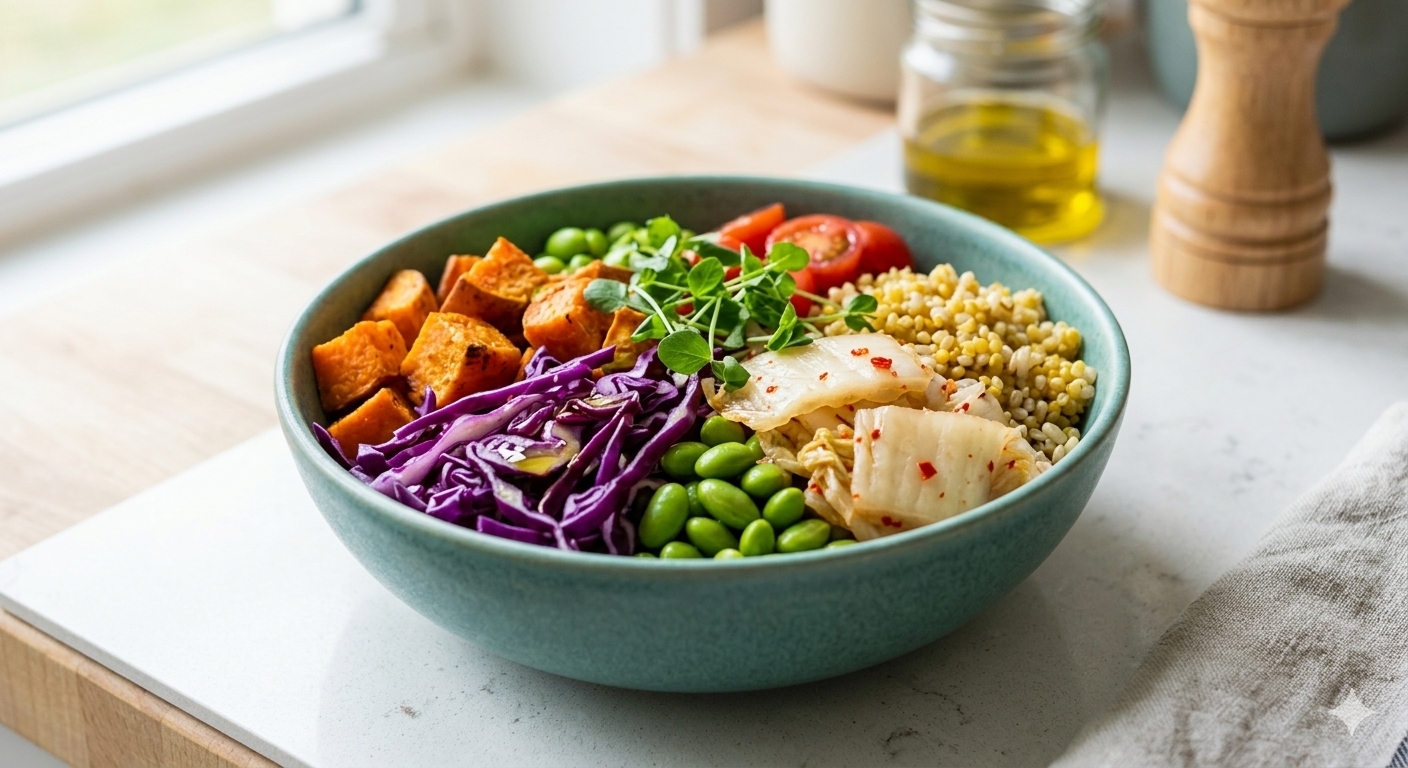
Chronic, low-grade inflammation — not the kind you get from a cut, but a slow-burning background process — is linked to a wide range of long-term health issues. That's the real science underneath the wave of "anti-inflammatory" food marketing you're seeing everywhere right now. The underlying idea is legitimate; a lot of the specific product claims built on top of it aren't.
What's actually well-supported
Diets consistently associated with lower markers of inflammation share a few real features: a high proportion of vegetables, fruit, whole grains and legumes, regular intake of fermented foods, and a lower proportion of ultra-processed food and added sugar. None of this is exotic — it overlaps heavily with long-studied patterns like the Mediterranean diet.
Where the hype outruns the evidence
Individual "superfood" claims — a single berry, powder, or supplement marketed as uniquely anti-inflammatory — are almost never supported by the kind of evidence behind the dietary pattern as a whole. The overall pattern of what you eat consistently matters far more than any single ingredient.
A realistic way to apply this
Rather than hunting for specific anti-inflammatory foods, the more evidence-backed approach is subtraction-first: reduce ultra-processed food and added sugar, then build meals around vegetables, whole grains, and fermented foods you actually enjoy. That's a smaller ask than an entirely new diet, and it's closer to what the research actually supports.
The bottom line
The underlying science on chronic inflammation and diet is real. The lesson from it is boring compared to the marketing: eat more whole, minimally processed food and less added sugar — not a specific branded product.