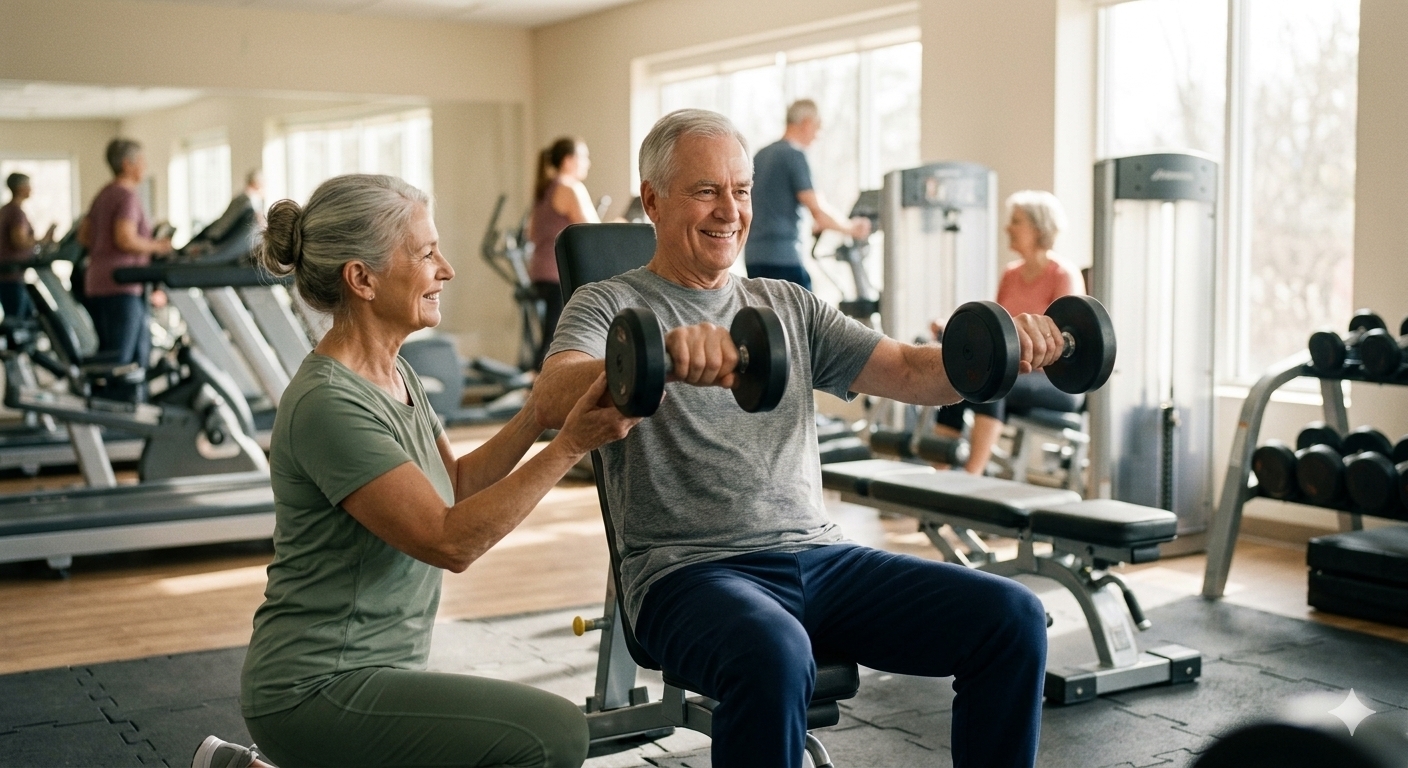
A recent industry survey of personal trainers found something notable: most clients are no longer driven mainly by appearance. Longevity and healthy aging have overtaken the traditional physique goal as the top motivator for training in 2026.
What training for longevity actually emphasizes
The shift isn't really about new exercises — it's about priorities. Programs built around longevity put more weight on strength training (specifically to preserve muscle mass with age), mobility and balance work, and steady cardiovascular fitness, rather than being centered purely around calorie burn or aesthetic change.
Why strength training specifically matters more with age
Muscle mass naturally declines with age if it isn't actively maintained, and that decline is closely linked to frailty and reduced independence later in life. This is also part of why weight-management medications have shifted the personal training conversation — trainers increasingly focus clients using these medications on preserving muscle, not just losing weight, since rapid weight loss without strength work can disproportionately reduce muscle along with fat.
What this means if you're just starting out
You don't need to choose between training for how you look and training for longevity — the overlap is large. But if you're deciding where to put limited time, two to three strength sessions a week plus regular movement (like the walking method covered in our fitness section) covers most of what the current research prioritizes.
The bottom line
The "longevity" framing isn't just marketing language — it reflects a genuine, evidence-supported shift toward training patterns that hold up better over decades, not just for a season.