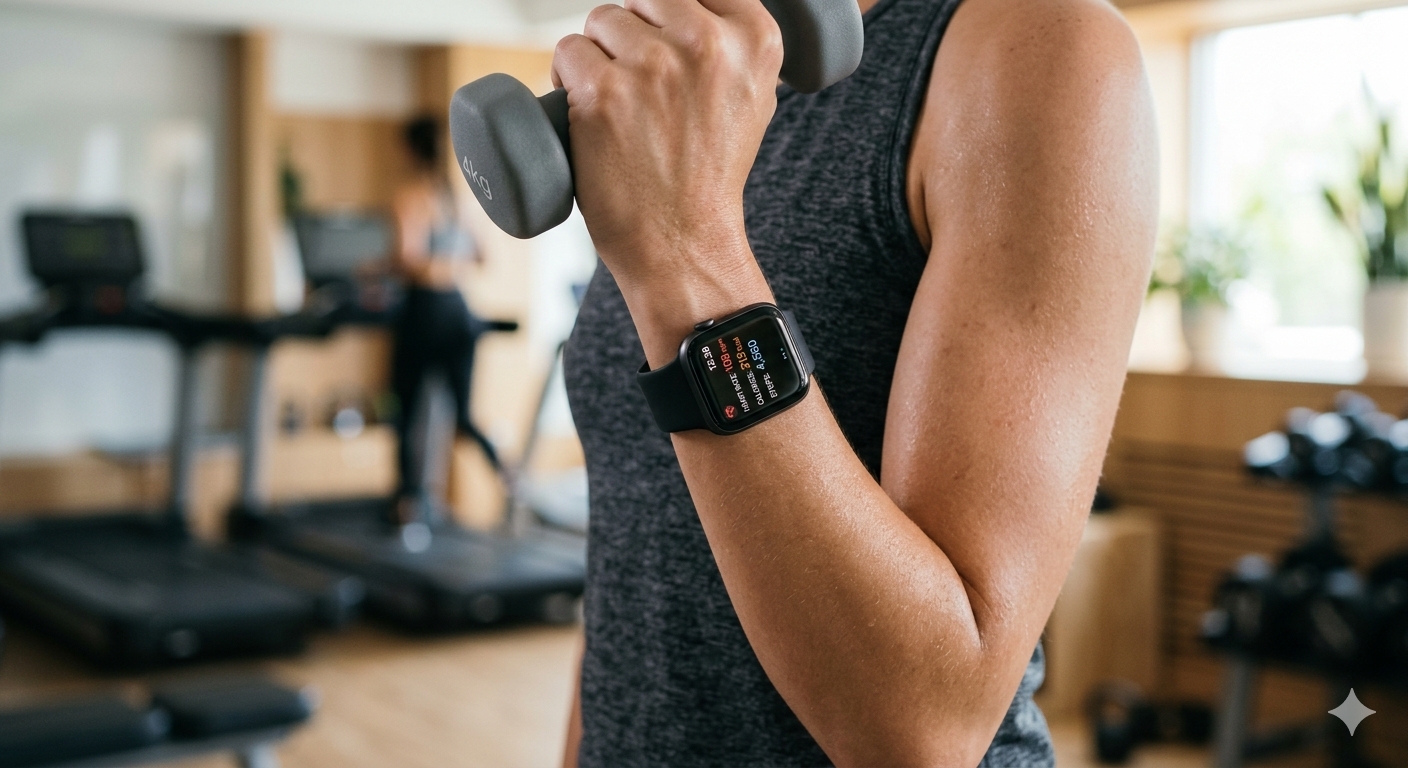
For the twentieth year running, an annual survey of thousands of clinicians and exercise professionals has ranked the year's top fitness trend — and for 2026, wearable technology holds the number one spot.
What's actually new here
Wearables stopped being step-counters years ago. Current devices track heart rate variability, blood oxygen, skin temperature, and sleep staging in real time, feeding that data back into personalized training and recovery suggestions. The meaningful shift isn't the sensors themselves — it's the feedback loop: your device now adjusts recommendations based on your actual physiological state that day, not a fixed weekly plan.
Why this matters more for recovery than for training
The most useful application isn't telling you to push harder — it's telling you when not to. Elevated resting heart rate and poor sleep staging are reasonably good early signals of under-recovery, and catching that before a workout, rather than after a plateau or injury, is where this technology adds the most real value.
Where to be a little skeptical
Not every metric a wearable reports is equally reliable — sleep staging in particular is still less accurate than a clinical sleep study. Treat the data as a general trend indicator over weeks, not a precise daily diagnosis, and don't let a single "bad" reading override how you actually feel.
The bottom line
You don't need a wearable to train effectively — people did it for decades without one. But if you already have one, the biggest practical win is using it for recovery signals, not just as a workout scorekeeper.